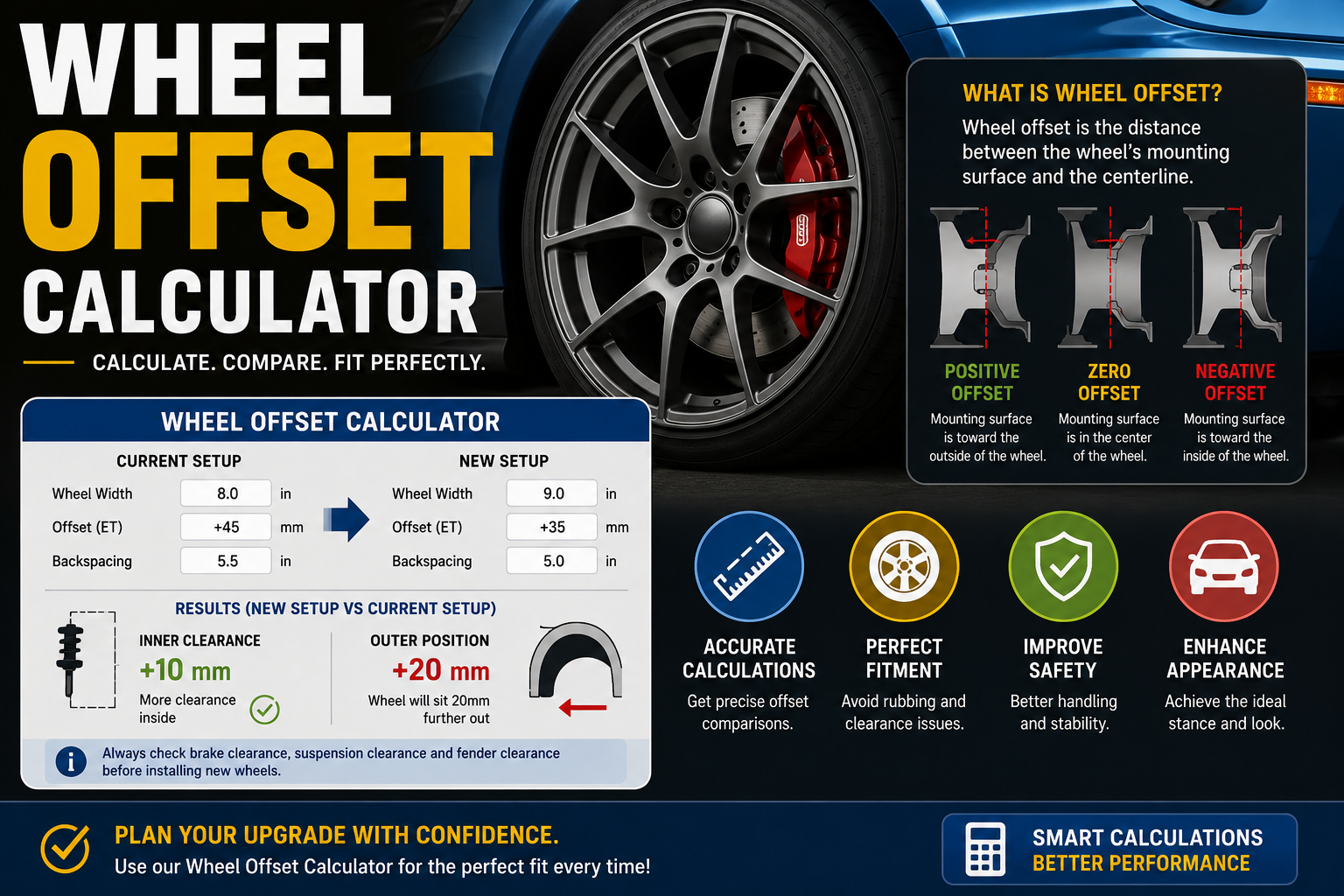
Wheel Offset Calculator
A wheel offset calculator helps car owners measure and compare wheel fitment accurately. When people upgrade wheels or tires, they often need to check whether the new wheels will fit correctly. A wheel offset calculator makes this process easier by showing how wheel position changes affect the vehicle.
Wheel offset is the distance between the wheel’s centerline and the mounting surface. This measurement affects how far the wheel sits inside or outside the wheel well. Even small offset changes can impact handling, suspension clearance, braking, and overall appearance.
A wheel offset calculator is useful for car enthusiasts, mechanics, and vehicle owners who want safer wheel upgrades. Instead of guessing fitment, users can calculate exact wheel position changes before buying new wheels.
Modern vehicles come with specific wheel offset ranges from the factory. Installing incorrect offsets may cause rubbing issues, steering problems, or uneven tire wear. A wheel offset calculator helps avoid these problems by providing accurate measurements quickly.
Many online wheel offset calculators also compare old and new wheel sizes. This allows users to see inner clearance changes and outer wheel extension clearly before installation.
What Is a Wheel Offset Calculator?
A wheel offset calculator is an online tool that helps users compare wheel offsets and determine wheel fitment changes. It calculates how new wheels will sit compared to current wheels based on width and offset measurements.
Wheel offset is usually measured in millimeters. Positive offset means the mounting surface is closer to the front side of the wheel. Negative offset means the mounting surface moves closer to the back side. Zero offset places the mounting surface exactly in the center.
A wheel offset calculator helps users understand these measurements without difficult manual calculations. Users enter current wheel size, wheel width, and offset values. Then they add the specifications for the new wheels. The calculator instantly shows fitment differences.
This tool is important because incorrect wheel offsets can create clearance problems. Wheels may rub against suspension parts, brakes, or fenders if fitment is wrong. A wheel offset calculator helps prevent costly mistakes before purchasing wheels.
Many automotive enthusiasts use this tool when upgrading to larger wheels or wider tires. The calculator also helps users achieve a more aggressive or flush wheel appearance while maintaining safe fitment.
| Offset Type | Description |
| Positive Offset | Wheel sits more inside the vehicle |
| Zero Offset | Mounting surface aligns with centerline |
| Negative Offset | Wheel extends outward from the vehicle |
How a Wheel Offset Calculator Works
A wheel offset calculator compares the dimensions of current wheels and new wheels. It calculates inner clearance changes and outer wheel positioning based on width and offset values.
The calculator first measures the wheel width difference. Wider wheels naturally extend further inward and outward. Then it applies the offset difference to determine final wheel placement.
For example, suppose the factory wheel has a +45 offset and the new wheel has a +35 offset. The new wheel moves outward by 10 millimeters. If the wheel width also increases, the calculator combines both changes to show total movement.
A wheel offset calculator helps users visualize these changes clearly. Instead of doing complicated math manually, the tool provides instant results. This improves decision-making when selecting aftermarket wheels.
Some calculators also include tire size comparisons. These features help users check overall diameter changes and possible speedometer differences. Advanced calculators may even show suspension and fender clearance estimates.
Many online wheel offset calculators are mobile-friendly and free to use. Users can calculate wheel fitment quickly while shopping online or visiting wheel shops.
Why Wheel Offset Matters
A wheel offset calculator is important because wheel offset directly affects vehicle performance and safety. Incorrect wheel offsets can change steering feel, suspension geometry, and tire clearance.
Positive offsets push wheels further inside the wheel well. This setup is common in modern front-wheel-drive vehicles. Negative offsets push wheels outward, creating a wider stance often seen on trucks and off-road vehicles.
If the wheel sits too far inward, it may rub against suspension parts or brake components. If it extends too far outward, it may hit the fender during turns or bumps. A wheel offset calculator helps users avoid these problems.
Wheel offset also affects handling. Large offset changes can increase stress on wheel bearings and suspension components. Poor fitment may lead to uneven tire wear or steering instability over time.
Car enthusiasts also care about appearance. Some drivers want wheels to sit flush with the fenders for a sportier look. A wheel offset calculator helps achieve the desired stance safely.
Using the calculator before purchasing wheels helps prevent expensive installation mistakes and improves overall vehicle performance.
Benefits of Using a Wheel Offset Calculator
A wheel offset calculator offers many advantages for vehicle owners and wheel buyers. One major benefit is accurate wheel fitment. The calculator helps users choose wheels that fit properly without rubbing or clearance issues.
The tool also saves money. Incorrect wheel purchases can become expensive because returns and replacements often cost extra. A wheel offset calculator reduces the risk of buying the wrong wheels.
Another benefit is improved safety. Proper wheel fitment helps maintain steering stability, braking performance, and suspension alignment. Safe wheel positioning reduces the chance of handling problems while driving.
The calculator also helps users compare wheel setups quickly. They can test different wheel widths and offsets before making a final decision. This flexibility is useful for both daily drivers and performance vehicles.
Automotive shops and mechanics also benefit from wheel offset calculators. The tool speeds up wheel fitment checks and improves customer recommendations.
Some advanced calculators even provide visual fitment comparisons. Users can see how far the wheel moves inward or outward relative to factory wheels.
| Benefit | Description |
| Accurate Fitment | Helps prevent rubbing issues |
| Cost Savings | Reduces wrong wheel purchases |
| Better Safety | Supports proper vehicle handling |
| Easy Comparisons | Allows testing different wheel setups |
| Improved Appearance | Helps achieve desired wheel stance |
Understanding Positive and Negative Offset
A wheel offset calculator becomes more useful when users understand positive and negative offsets clearly. Positive offset is the most common setup on modern cars. In this setup, the wheel mounting surface sits closer to the outside face of the wheel.
Positive offsets place the wheel deeper inside the wheel well. This setup improves stability and supports factory suspension geometry. Most passenger vehicles use positive offset wheels.
Negative offset moves the wheel outward from the vehicle. Trucks, lifted vehicles, and off-road builds often use negative offsets to create a wider stance and aggressive appearance.
Zero offset places the mounting surface exactly in the center of the wheel. This setup balances inner and outer wheel spacing equally.
Changing offset affects wheel position directly. Even a small change of 5 to 10 millimeters can impact clearance significantly. A wheel offset calculator helps users understand these movements accurately before installation.
Common Problems Caused by Wrong Wheel Offset
Using the wrong wheel offset may create several issues. A wheel offset calculator helps users avoid these common problems before buying new wheels.
One common issue is tire rubbing. Wheels with incorrect offsets may contact suspension parts, fenders, or wheel liners during turns or bumps. This can damage tires and affect driving comfort.
Steering problems are another concern. Large offset changes can alter steering response and create instability at higher speeds. Poor wheel positioning may also increase strain on suspension components.
Wheel bearing wear can happen faster with extreme offset setups. Wheels that extend too far outward place additional pressure on bearings and hubs. Over time, this can lead to expensive repairs.
Brake clearance problems may also occur. Some aftermarket wheels may not provide enough space for larger brake calipers. A wheel offset calculator helps users identify these fitment concerns early.
Uneven tire wear is another common problem caused by poor fitment. Incorrect wheel positioning can change alignment angles and reduce tire lifespan.
How to Use a Wheel Offset Calculator
Using a wheel offset calculator is simple and quick. Most online calculators only require a few measurements to compare wheel setups accurately.
First, enter the current wheel specifications. This usually includes wheel width, wheel diameter, and offset value. Then enter the specifications for the new wheels you want to compare.
The calculator instantly shows the difference between the old and new wheel positions. It displays inner clearance changes and outer extension changes clearly.
Some calculators also include tire size comparison tools. Users can check overall tire diameter differences and speedometer accuracy after changing wheel setups.
Many wheel offset calculators provide visual diagrams for easier understanding. These graphics help users see how wheel positioning changes affect the vehicle.
Before purchasing wheels, users should also check brake clearance, suspension clearance, and tire compatibility. A wheel offset calculator provides valuable guidance, but full fitment checks remain important.
Why Online Wheel Offset Calculators Are Popular
Online wheel offset calculator tools have become popular because they simplify wheel fitment calculations. Car owners no longer need to perform complex measurements manually.
Most calculators are free and accessible from smartphones or computers. Users can compare wheel setups instantly while shopping for aftermarket wheels online.
Another reason for their popularity is accuracy. Automated calculations reduce human errors and provide reliable fitment estimates quickly. This helps users make better purchasing decisions.
Car modification culture has also increased demand for fitment tools. Many enthusiasts upgrade wheels for appearance, performance, or off-road capability. A wheel offset calculator supports safer and more professional modifications.
Automotive forums and wheel retailers often recommend using offset calculators before ordering wheels. The tool has become an important part of modern wheel customization and vehicle modification planning.
Conclusion
A wheel offset calculator is an essential tool for anyone upgrading or replacing vehicle wheels. It helps users compare wheel fitment, spacing, and positioning accurately before purchasing new wheels.
The calculator improves safety, prevents rubbing issues, and supports better vehicle handling. It also helps users achieve their desired wheel appearance while maintaining proper fitment.
Whether someone wants a flush stance, wider wheels, or better off-road performance, a wheel offset calculator makes the process easier and more reliable. With fast online access and simple calculations, these tools continue helping car owners make smarter wheel upgrade decisions.
FAQs
What is a wheel offset calculator?
A wheel offset calculator is a tool that compares wheel offsets and helps determine proper wheel fitment for vehicles.
Why is wheel offset important?
Wheel offset affects wheel positioning, suspension clearance, steering, handling, and overall vehicle safety.
Can incorrect wheel offset damage a car?
Yes, incorrect offsets may cause rubbing, suspension stress, wheel bearing wear, and steering problems.
What is positive wheel offset?
Positive offset means the wheel mounting surface sits closer to the outside face of the wheel, placing the wheel deeper inside the wheel well.
How does a wheel offset calculator help?
A wheel offset calculator helps users compare wheel setups and avoid fitment problems before purchasing new wheels.