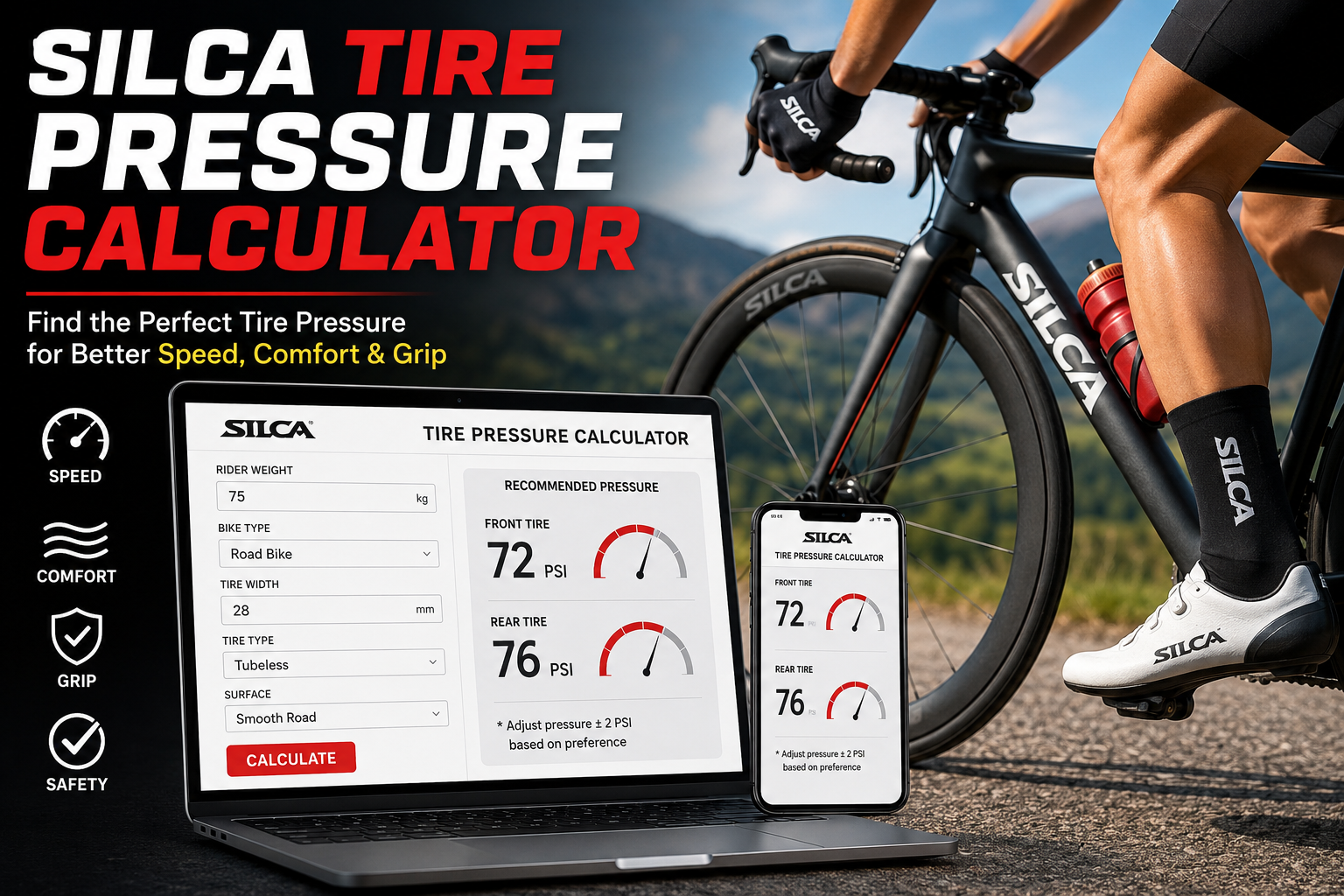
Cyclists know that tire pressure can change the whole riding experience. A few PSI more or less can affect speed, comfort, grip, and control. The Silca Tire Pressure Calculator helps riders find the correct pressure for their bike tires based on real riding conditions. Many professional and casual riders use this tool because it gives accurate results in seconds.
The calculator uses details like rider weight, tire width, road surface, and bike type. It then suggests the ideal tire pressure for front and rear tires. This makes riding smoother and safer. Riders also avoid problems like pinch flats, poor grip, or unnecessary rolling resistance.
Modern bikes use wider tires than before. Because of this, older pressure methods no longer work well. The Silca Tire Pressure Calculator solves this issue by giving custom pressure recommendations. It works for road bikes, gravel bikes, mountain bikes, and even racing setups.
Cyclists who use the correct tire pressure often feel more confident on the road. Their bikes roll faster and stay stable during turns. Good pressure also reduces fatigue on long rides. That is why many riders now depend on the Silca Tire Pressure Calculator before every ride.
What Is the Silca Tire Pressure Calculator?
The Silca Tire Pressure Calculator is an online cycling tool that helps riders choose the perfect tire pressure. Instead of guessing PSI levels, cyclists can enter riding details and receive accurate recommendations. The calculator is designed using professional cycling data and modern tire technology.
This calculator works by studying different factors that affect tire performance. Rider weight is one of the most important details because heavier riders need higher pressure. Tire width also changes pressure needs. Wider tires usually require lower PSI compared to narrow tires. Surface type matters too. Smooth roads need different pressure than gravel or rough terrain.
The Silca Tire Pressure Calculator also considers riding style and bike setup. Riders using tubeless tires may need different pressure compared to tube tires. Weather and road conditions can also influence results. The goal is to create the best balance between comfort, speed, and grip.
Cyclists once believed high pressure always made bikes faster. Modern testing proved that lower pressure can actually improve rolling efficiency on real roads. The Silca Tire Pressure Calculator follows this modern cycling science. That is why many professional riders trust it during races and training sessions.
The tool is simple to use and works for beginners and experts alike. Even new cyclists can quickly learn how tire pressure affects bike performance.
How the Silca Tire Pressure Calculator Works
The Silca Tire Pressure Calculator uses cycling science and performance data to calculate ideal tire pressure. Riders only need to enter a few details. After that, the calculator gives PSI recommendations for both front and rear tires.
The process starts with rider weight. Total system weight includes the cyclist, bike, gear, bottles, and accessories. This helps the calculator understand how much load the tires carry. Heavier setups need more pressure to prevent tire damage and improve control.
Tire size is another important factor. Wider tires hold more air volume, so they work well with lower pressure. Narrow tires usually require more PSI for stability. The calculator also checks wheel type and tire construction because these details affect ride feel.
Road conditions also play a major role. Smooth asphalt allows slightly higher pressure for speed. Rough roads or gravel surfaces need lower pressure for comfort and traction. Lower pressure helps tires absorb vibrations and maintain better contact with the ground.
The Silca Tire Pressure Calculator then uses advanced algorithms to create balanced pressure recommendations. Front tire pressure is usually lower because the rear wheel carries more weight. This improves cornering and comfort during long rides.
Many riders notice better handling after using the correct pressure. Bikes feel more stable during descents and faster on rough roads. Riders also reduce the risk of flats and tire wear. This makes the Silca Tire Pressure Calculator a valuable tool for daily riding and racing.
Benefits of Using the Silca Tire Pressure Calculator
The Silca Tire Pressure Calculator offers many benefits for cyclists of all levels. One of the biggest advantages is improved comfort. Correct tire pressure reduces road vibration and helps riders stay comfortable during long rides. Lower fatigue means cyclists can ride longer and perform better.
Another major benefit is speed. Many people think hard tires always roll faster. Real-world testing shows this is not always true. Tires with balanced pressure roll more efficiently because they absorb rough road surfaces better. The Silca Tire Pressure Calculator helps riders find this balance.
Grip and safety also improve with proper pressure. Tires with too much pressure can bounce on rough roads and lose traction. Tires with too little pressure may feel unstable during turns. The calculator finds the sweet spot for better handling and control.
Cyclists also save money because correct pressure protects tires from damage. Overinflated tires wear out faster in the center tread area. Underinflated tires risk sidewall damage and pinch flats. Using the Silca Tire Pressure Calculator helps tires last longer.
The tool also helps riders adjust pressure for different riding styles. Racers may choose slightly different settings compared to endurance riders. Gravel cyclists can lower pressure for rough terrain and better grip.
Professional teams often use pressure calculators because small changes can affect race performance. Even casual riders notice smoother rides after making adjustments. This is why the Silca Tire Pressure Calculator has become popular in modern cycling communities.
Factors That Affect Tire Pressure
Several factors influence the pressure recommendations from the Silca Tire Pressure Calculator. Understanding these factors helps cyclists make smarter decisions before every ride.
Rider weight is the most important factor. Heavier riders compress tires more, so they need higher PSI. Lighter riders usually ride better with lower pressure because their tires do not compress as much.
Tire width also changes pressure needs. Modern bikes often use wider tires because they improve comfort and rolling speed. A 28mm tire needs less pressure than a 23mm tire. Gravel bikes with very wide tires often use even lower PSI levels.
Road conditions affect performance too. Smooth pavement allows higher pressure for speed. Rough roads require lower pressure to improve grip and comfort. Gravel surfaces usually need much lower pressure to avoid bouncing and slipping.
Weather can also influence tire pressure. Hot temperatures increase air pressure inside tires, while cold weather lowers it. Riders should check pressure regularly before riding.
Bike type matters as well. Road bikes, gravel bikes, and mountain bikes all use different tire setups. Tubeless tires often allow lower pressure because they resist pinch flats better than tubes.
The table below shows how different conditions affect tire pressure.
| Factor | Effect on Tire Pressure |
| Higher rider weight | Increases PSI |
| Wider tires | Lowers PSI |
| Rough roads | Lowers PSI |
| Smooth roads | Raises PSI slightly |
| Tubeless setup | Allows lower PSI |
| Heavy bike gear | Increases PSI |
The Silca Tire Pressure Calculator combines all these factors to create balanced recommendations for better cycling performance.
Why Correct Tire Pressure Matters in Cycling
Correct tire pressure is one of the most important parts of bike performance. Many cyclists spend money on expensive wheels and components but ignore tire pressure. The Silca Tire Pressure Calculator helps riders understand why PSI settings matter so much.
Comfort is the first major reason. High pressure makes rides harsh and uncomfortable on rough roads. Riders feel every bump and vibration. Correct pressure softens the ride and improves endurance during long cycling sessions.
Efficiency also improves with proper PSI. Tires that are too hard can bounce over rough surfaces, causing energy loss. Balanced pressure keeps tires connected to the road for smoother rolling. The Silca Tire Pressure Calculator helps riders achieve this balance.
Handling and control become much better with the correct settings. Riders feel safer during fast turns and descents. Tires maintain stronger grip, especially in wet conditions. Lower pressure can increase traction on gravel and uneven roads.
Safety is another major factor. Underinflated tires can cause pinch flats and poor cornering. Overinflated tires may burst or lose grip suddenly. Correct PSI reduces these risks and creates a safer riding experience.
Bike components also last longer with balanced tire pressure. Wheels absorb less shock, and tires wear more evenly. Riders save money on replacements over time.
Cyclists who regularly use the Silca Tire Pressure Calculator often notice immediate improvements. Their bikes feel faster, smoother, and easier to control. Small PSI changes can make a huge difference in overall ride quality.
Best Practices for Using the Silca Tire Pressure Calculator
To get the best results from the Silca Tire Pressure Calculator, riders should follow a few important practices. Accurate information leads to better pressure recommendations and improved performance.
Cyclists should first measure total riding weight carefully. This includes body weight, bike weight, water bottles, bags, tools, and clothing. Small weight differences can change pressure recommendations.
Riders should also know the exact tire width written on the tire sidewall. Tire width greatly affects PSI calculations. Using incorrect measurements may produce poor results.
Checking tire pressure before every ride is also important. Air slowly escapes from bike tires over time. Even small pressure changes can affect comfort and handling. Many experienced cyclists check PSI daily.
Cyclists should test different pressures around the recommended range. Some riders prefer slightly softer setups for comfort, while others like firmer settings for speed. The Silca Tire Pressure Calculator provides an excellent starting point for adjustments.
Weather and terrain should also guide pressure choices. Riders on wet roads may reduce pressure slightly for extra grip. Gravel riders often lower PSI more than road cyclists.
The table below shows common tire pressure ranges for different cycling styles.
| Bike Type | Common PSI Range |
| Road Bike | 70–100 PSI |
| Gravel Bike | 30–60 PSI |
| Mountain Bike | 18–35 PSI |
| Hybrid Bike | 50–70 PSI |
Using the Silca Tire Pressure Calculator together with personal riding experience helps cyclists achieve the best performance possible.
Common Mistakes Riders Make With Tire Pressure
Many cyclists make simple tire pressure mistakes that hurt performance and comfort. The Silca Tire Pressure Calculator helps riders avoid these common problems.
One major mistake is using maximum PSI written on the tire sidewall. Many riders think maximum pressure is the best setting. In reality, maximum PSI only shows the highest safe limit. Riding at this level often reduces comfort and grip.
Another mistake is copying pressure from friends or online forums. Every rider has different weight, tires, and riding conditions. The Silca Tire Pressure Calculator gives personalized recommendations instead of general advice.
Ignoring terrain is also common. Riders sometimes use the same pressure on smooth roads and rough gravel. This reduces performance and increases discomfort. Different surfaces require different PSI levels.
Some cyclists forget to check pressure regularly. Tires naturally lose air over time. Riding with low pressure increases the chance of flats and poor handling.
Another mistake is using equal pressure in both tires. Rear tires usually need slightly more PSI because they carry more weight. The calculator adjusts front and rear pressure separately for better balance.
Many beginners also fear lower pressure settings. Modern cycling research shows that lower pressure can improve speed and comfort on real roads. Riders who trust the Silca Tire Pressure Calculator often discover better performance after reducing PSI slightly.
Avoiding these mistakes helps cyclists ride safer, faster, and more comfortably.
FAQs About Silca Tire Pressure Calculator
What is the Silca Tire Pressure Calculator used for?
The Silca Tire Pressure Calculator helps cyclists find the best tire pressure based on rider weight, tire width, road type, and bike setup.
Is lower tire pressure faster?
In many real-world conditions, lower pressure can improve rolling efficiency and comfort. The correct balance depends on terrain and tire size.
Does the Silca Tire Pressure Calculator work for gravel bikes?
Yes, the calculator works for road bikes, gravel bikes, mountain bikes, and other cycling setups.
How often should I check bike tire pressure?
Cyclists should check tire pressure before every ride because tires lose air naturally over time.
Can wrong tire pressure damage bike tires?
Yes, overinflated and underinflated tires can wear out faster and increase the risk of flats or poor handling.