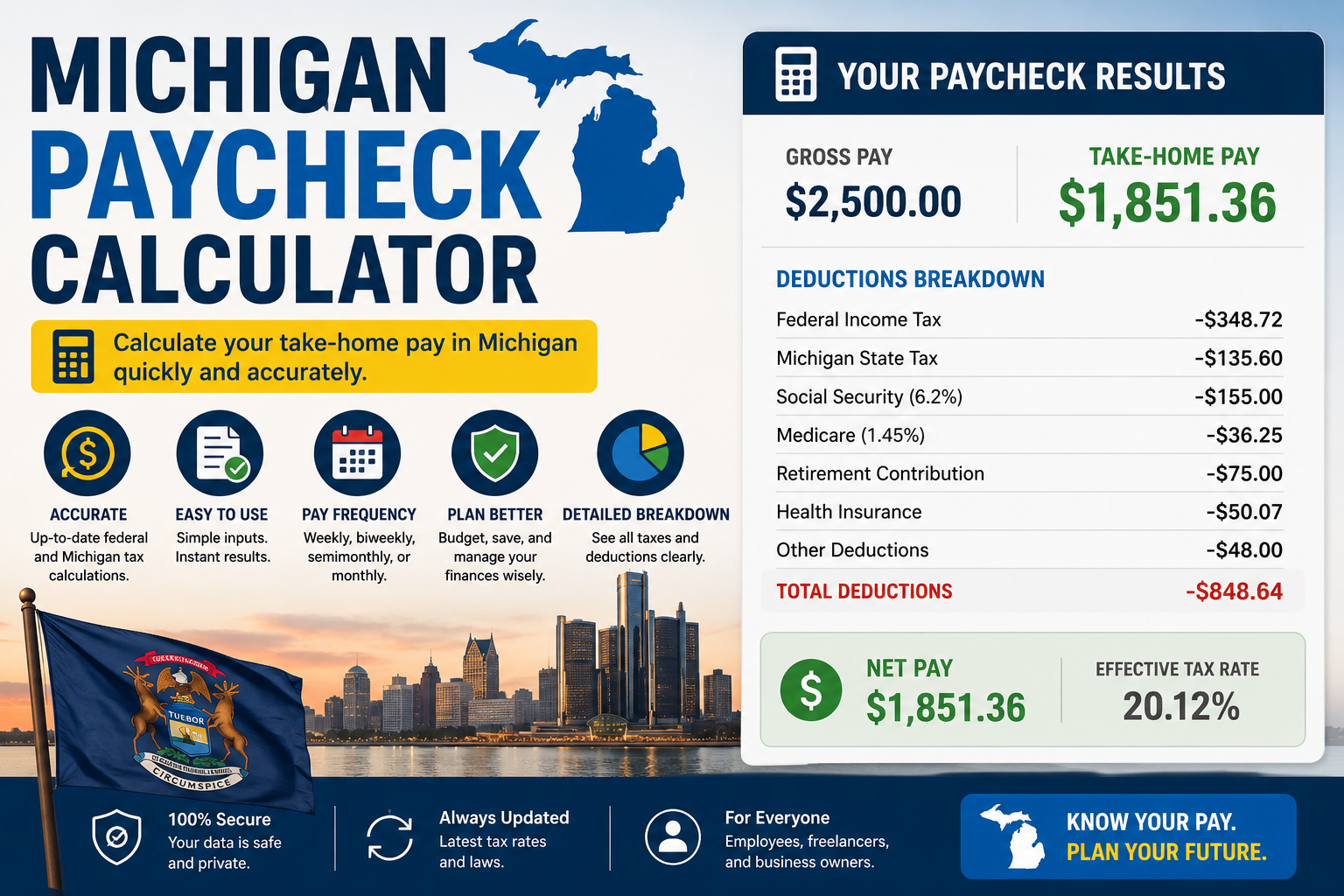
Michigan Paycheck Calculator
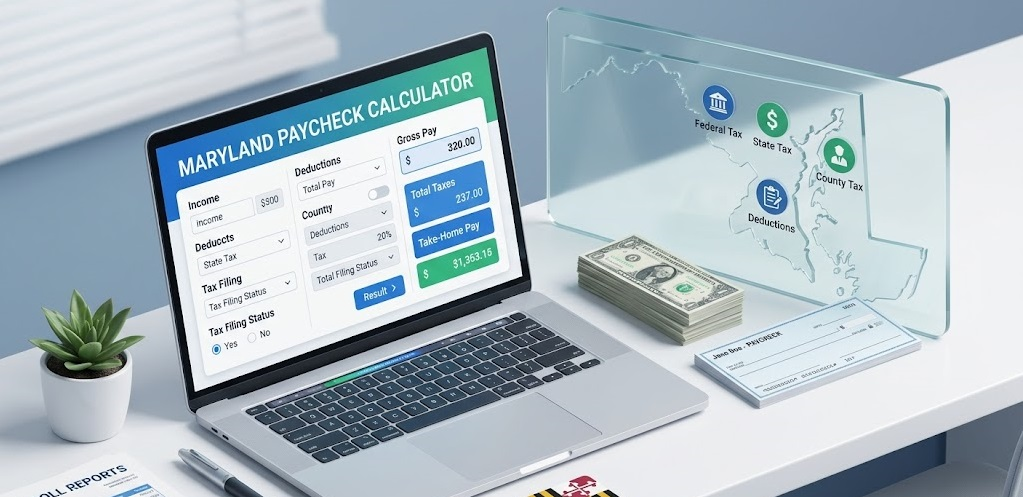
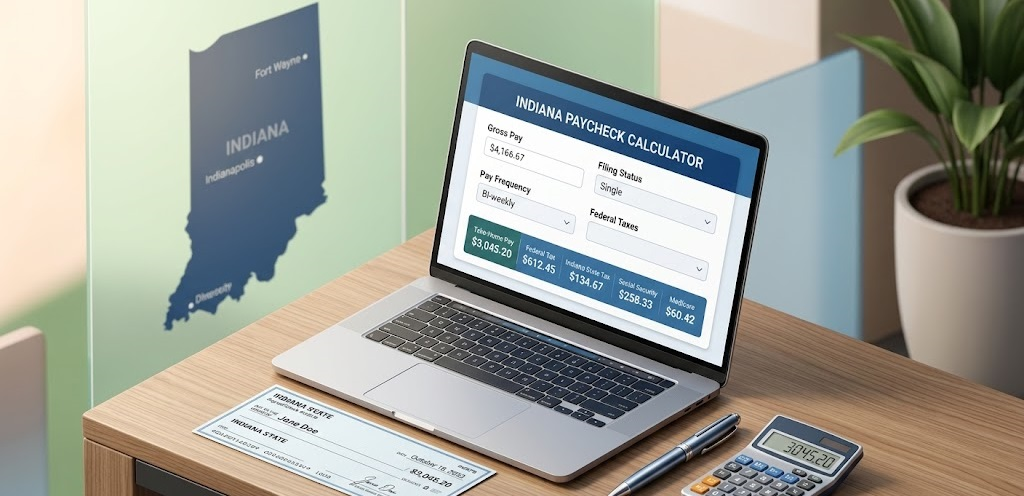
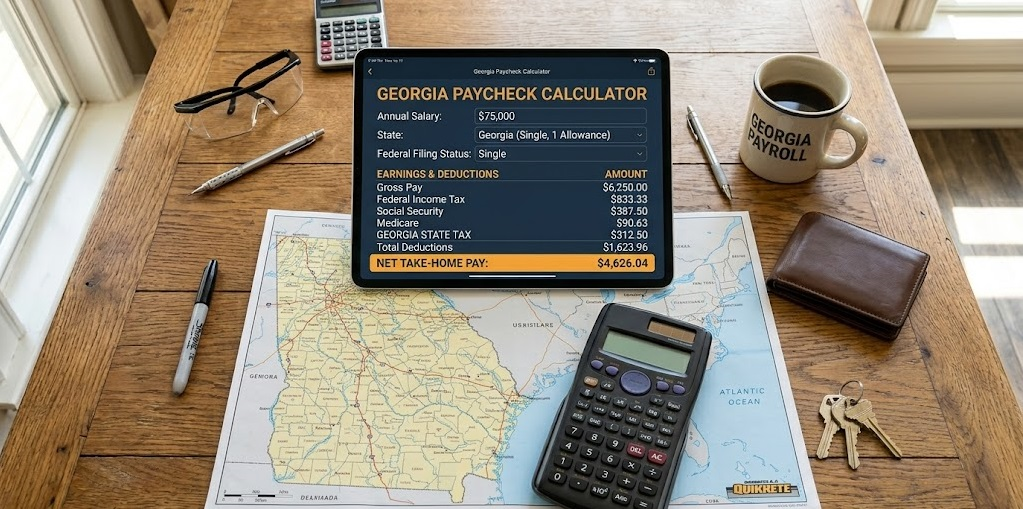
A Michigan paycheck calculator helps employees estimate their take-home salary after taxes and deductions. Many workers want to know how much money they will actually receive after federal taxes, Michigan state taxes, Social Security, Medicare, and other deductions are removed from gross income.
A Michigan paycheck calculator makes paycheck planning easier and more accurate. Instead of manually calculating taxes and deductions, employees can enter their salary details into the calculator and get instant results. This helps workers manage budgets, savings, bills, and financial goals more effectively.
The calculator is useful for hourly workers, salaried employees, freelancers, and business owners. It helps users estimate weekly, biweekly, semimonthly, or monthly paychecks based on income and tax settings.
Michigan has its own state income tax system, which affects employee paychecks differently than other states. A Michigan paycheck calculator includes these local tax rates along with federal payroll deductions to provide accurate estimates.
Many online paycheck calculators also allow users to adjust withholding allowances, retirement contributions, health insurance deductions, and bonuses. These features create a more realistic paycheck estimate.
What Is a Michigan Paycheck Calculator?
A Michigan paycheck calculator is an online tool that estimates an employee’s net paycheck after taxes and deductions. The calculator starts with gross income and subtracts required deductions to show take-home pay.
Gross income is the total amount earned before taxes. Net income, also called take-home pay, is the final amount employees receive after deductions are removed.
A Michigan paycheck calculator usually includes:
- Federal income tax
- Michigan state income tax
- Social Security tax
- Medicare tax
- Retirement deductions
- Health insurance deductions
The calculator helps employees understand how taxes affect their earnings. It also helps employers estimate payroll costs more accurately.
Workers often use paycheck calculators before accepting new jobs or negotiating salaries. Understanding estimated take-home pay makes financial planning easier.
Many calculators support different pay schedules including:
| Pay Schedule | Description |
| Weekly | Paid once every week |
| Biweekly | Paid every two weeks |
| Semimonthly | Paid twice each month |
| Monthly | Paid once each month |
How a Michigan Paycheck Calculator Works
A Michigan paycheck calculator works by calculating payroll taxes and deductions automatically. Users enter basic information such as salary, hourly rate, pay frequency, filing status, and withholding details.
The calculator first determines gross pay. Then it subtracts federal taxes, Michigan state taxes, Social Security, and Medicare contributions.
Michigan currently applies a flat state income tax rate. Federal taxes vary based on income level, filing status, and withholding elections. A paycheck calculator combines all these details to estimate take-home pay accurately.
For hourly employees, the calculator multiplies hours worked by the hourly wage. Overtime pay may also be included if applicable.
For salaried employees, annual salary is divided according to the selected pay schedule. The calculator then applies deductions based on the pay period.
Some advanced paycheck calculators also estimate:
- Bonuses
- Retirement contributions
- Health insurance costs
- Pre-tax deductions
- Post-tax deductions
These features help employees see a more complete paycheck estimate before payday.
Why Employees Use a Michigan Paycheck Calculator
Many workers use a Michigan paycheck calculator to understand their real earnings after taxes. Gross salary may look large, but taxes and deductions reduce actual take-home pay significantly.
Employees often use paycheck calculators when starting a new job. The tool helps them estimate monthly income and create realistic budgets. Knowing expected take-home pay also helps workers manage rent, transportation, groceries, and savings goals.
Job seekers use Michigan paycheck calculators to compare salary offers more accurately. Two jobs with similar salaries may produce different paychecks because of benefits, deductions, or tax settings.
Hourly workers also benefit from paycheck calculators because their income may change weekly based on hours worked. Overtime calculations help employees estimate higher earnings during busy work periods.
Freelancers and contract workers sometimes use paycheck calculators to estimate payroll deductions when transitioning into traditional employment.
Many workers also use the calculator to adjust tax withholdings. Changing withholding amounts may increase or reduce paycheck sizes depending on personal tax goals.
Benefits of Using a Michigan Paycheck Calculator
A Michigan paycheck calculator offers several benefits for employees and employers. One major advantage is financial planning. Accurate paycheck estimates help users budget more effectively.
The calculator also improves tax awareness. Many employees do not fully understand how federal and state taxes affect paychecks. A paycheck calculator shows these deductions clearly.
Another benefit is payroll transparency. Employees can compare estimated paychecks with actual pay stubs to identify possible payroll errors quickly.
Businesses and payroll managers also benefit from paycheck calculators because they simplify payroll processing and employee wage estimates.
The calculator also supports salary negotiation. Employees can estimate take-home pay from different salary offers and compare opportunities more accurately.
Some advanced tools allow users to experiment with deductions and retirement contributions. This helps employees understand how benefits and savings plans impact take-home income.
| Benefit | Description |
| Budget Planning | Helps estimate monthly income |
| Payroll Accuracy | Supports paycheck verification |
| Tax Awareness | Shows payroll deductions clearly |
| Salary Comparison | Helps compare job offers |
| Financial Management | Supports better savings planning |
Michigan Taxes and Payroll Deductions
Understanding taxes is important when using a Michigan paycheck calculator. Payroll deductions reduce gross earnings before employees receive take-home pay.
Federal income tax depends on:
- Income level
- Filing status
- W-4 withholding settings
Michigan also applies a flat state income tax rate to employee earnings. This tax is automatically withheld from paychecks by employers.
Social Security and Medicare taxes are federal payroll taxes required for most employees. Social Security helps fund retirement benefits, while Medicare supports healthcare programs.
Additional deductions may include:
- Health insurance
- Retirement plans
- Dental insurance
- Vision insurance
- Union dues
Pre-tax deductions reduce taxable income before taxes are calculated. Post-tax deductions are removed after taxes are applied.
A Michigan paycheck calculator combines all these deductions to estimate net pay accurately.
How to Use a Michigan Paycheck Calculator
Using a Michigan paycheck calculator is simple and fast. Most online calculators only require a few details to estimate paycheck amounts.
Users usually enter:
- Gross salary or hourly wage
- Hours worked
- Pay frequency
- Filing status
- State of residence
- Retirement deductions
- Insurance deductions
The calculator automatically applies federal and Michigan tax rates. It then estimates take-home pay after deductions.
Some calculators also allow users to include overtime, bonuses, commissions, and extra withholding amounts.
The results typically show:
- Gross pay
- Federal taxes
- State taxes
- Social Security deductions
- Medicare deductions
- Net pay
Many online calculators work instantly on mobile phones and desktop computers. Employees can calculate paycheck estimates anytime without downloading software.
Why Take-Home Pay Is Different From Gross Pay
Many people misunderstand the difference between gross income and net income. A Michigan paycheck calculator helps explain this clearly.
Gross pay is the total amount earned before taxes and deductions. Net pay is the final amount employees receive after deductions are removed.
For example, an employee earning $5,000 monthly gross pay may receive a lower take-home paycheck because of taxes and insurance deductions.
Federal taxes, Michigan taxes, Social Security, and Medicare reduce paycheck amounts automatically. Additional deductions like retirement contributions or healthcare coverage may further reduce net income.
Understanding these differences helps employees manage finances more effectively. A paycheck calculator gives a realistic estimate of usable income instead of only showing gross salary figures.
Common Mistakes When Calculating Paychecks
People sometimes make errors while estimating paychecks manually. A Michigan paycheck calculator helps reduce these mistakes significantly.
One common mistake is forgetting payroll taxes. Many employees estimate income using gross salary instead of take-home pay.
Incorrect filing status can also affect paycheck estimates. Married, single, and head-of-household filing statuses have different tax impacts.
Some users forget retirement deductions, health insurance costs, or overtime pay when calculating income manually.
Using outdated tax rates may also create inaccurate results. Online paycheck calculators update tax information regularly for more reliable estimates.
Incorrect pay frequency settings may also affect calculations. Weekly and monthly payroll schedules create different paycheck amounts even with the same annual salary.
Using a trusted paycheck calculator improves accuracy and helps employees avoid budgeting errors.
Why Online Michigan Paycheck Calculators Are Popular
Online Michigan paycheck calculator tools have become very popular because they are simple, fast, and free to use. Employees can estimate take-home pay within seconds.
Mobile-friendly calculators allow users to calculate salaries anywhere using smartphones or tablets. This convenience supports faster financial planning.
Another reason for their popularity is accuracy. Automated tools reduce payroll calculation errors and apply updated tax rates automatically.
Employees also appreciate the flexibility of adjusting withholding settings and deductions. This helps users test different paycheck scenarios before making financial decisions.
Job seekers often use paycheck calculators before accepting employment offers. Understanding estimated net income helps compare salaries more realistically.
As financial planning becomes more important, paycheck calculators continue helping workers manage earnings and taxes more effectively.
Conclusion
A Michigan paycheck calculator is an essential tool for estimating take-home pay accurately. It helps employees understand payroll taxes, deductions, and net income clearly.
The calculator supports budgeting, salary comparison, and financial planning while reducing payroll confusion. Whether someone is an hourly worker, salaried employee, or business owner, paycheck calculations become easier and more reliable with this tool.
Using a Michigan paycheck calculator helps workers plan finances confidently and avoid surprises on payday. With fast online access and updated tax calculations, these tools continue making payroll estimation simple and convenient.
FAQs
What is a Michigan paycheck calculator?
A Michigan paycheck calculator estimates take-home pay after federal taxes, Michigan taxes, and payroll deductions.
How accurate is a Michigan paycheck calculator?
Most calculators provide accurate estimates using updated tax rates, but actual paychecks may vary slightly depending on employer deductions.
Does Michigan have state income tax?
Yes, Michigan applies a flat state income tax rate on employee earnings.
Can a paycheck calculator include overtime pay?
Yes, many paycheck calculators allow users to include overtime hours and bonus income.
Why is my take-home pay lower than my salary?
Taxes, Social Security, Medicare, retirement contributions, and insurance deductions reduce gross salary to create net pay.