A concrete yard calculator helps you estimate how much concrete you need for a project. Builders, contractors, and homeowners use this tool to calculate concrete volume in cubic yards. The calculator saves time and reduces waste.
Concrete projects require careful planning. You need the right amount of concrete before you start pouring. Too little concrete can delay your work. Too much concrete can increase costs. A concrete yard calculator helps you avoid these problems.
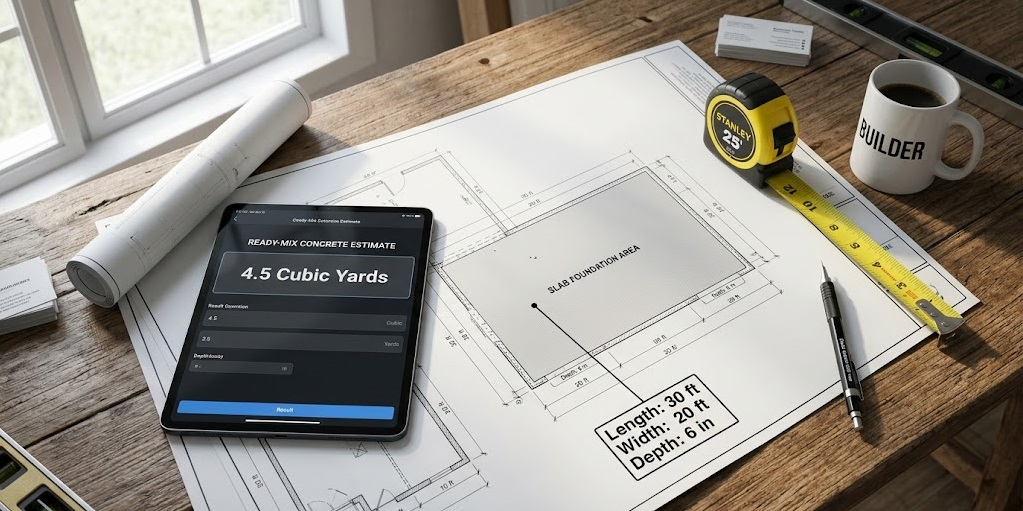
Most people use a concrete yard calculator for patios, slabs, sidewalks, driveways, foundations, and fence posts. The tool calculates concrete based on length, width, and depth. After entering measurements, the calculator provides the required cubic yards.
Construction work becomes easier when you use accurate estimates. The calculator helps you buy the correct amount of material. It also improves budgeting and project planning.
Many online concrete yard calculator tools work on phones and computers. Most calculators support feet, inches, meters, and centimeters. This makes the tool simple for everyone.
Whether you work on a small DIY project or a large construction job, a concrete yard calculator can improve your results.
What Is a Concrete Yard Calculator?
A concrete yard calculator is an online tool that calculates the amount of concrete needed in cubic yards. The calculator uses the project dimensions to estimate the total concrete volume.
Concrete suppliers often sell concrete by the cubic yard. One cubic yard equals 27 cubic feet. The calculator converts your measurements into cubic yards automatically.
Most calculators ask for three basic measurements. These include length, width, and depth. After entering these values, the calculator shows the required concrete amount.
The tool works for different types of construction projects. People use it for slabs, patios, sidewalks, stairs, foundations, and driveways. Contractors also use a concrete yard calculator to prepare material estimates for clients.
Manual calculations can create errors. A concrete yard calculator reduces mistakes and speeds up the process. It helps both beginners and professionals.
Some advanced calculators also estimate costs. They calculate the price based on the cost per cubic yard of concrete. This feature helps users prepare budgets before starting work.
A concrete yard calculator also helps reduce waste. Accurate estimates prevent over-ordering and improve material management.
How a Concrete Yard Calculator Works
A concrete yard calculator uses a simple volume formula to estimate concrete. The calculator multiplies the project dimensions and converts the result into cubic yards.
The basic formula looks like this:
| Formula | Purpose |
| Length × Width × Depth | Finds total volume |
| Cubic Feet ÷ 27 | Converts to cubic yards |
For example, imagine a slab that measures 12 feet long, 10 feet wide, and 4 inches deep. The calculator first converts the depth into feet. Then it multiplies the dimensions to calculate cubic feet. Finally, it divides the result by 27 to get cubic yards.
Most online calculators perform these calculations instantly. Users only need to enter measurements correctly.
Some calculators also allow users to select project shapes. Rectangles, circles, and columns may require different formulas. The tool handles these calculations automatically.
A concrete yard calculator can also estimate concrete bags. This feature helps people who buy ready-mix concrete bags instead of bulk concrete.
Many calculators support metric units as well. Users can enter meters or centimeters, and the calculator converts everything into cubic yards.
The tool provides fast and reliable results. This makes project planning easier and more accurate.
Why You Should Use a Concrete Yard Calculator
A concrete yard calculator offers many advantages for construction projects. The tool improves accuracy, reduces waste, and saves money.
Concrete can become expensive. Incorrect estimates may increase costs and delay work. A concrete yard calculator helps users buy the right amount of concrete from the beginning.
The calculator also improves project management. Contractors often use it to estimate material costs for clients. Accurate estimates create better budgets and smoother workflows.
DIY users benefit from the calculator as well. Many homeowners struggle with concrete measurements. The tool removes confusion and simplifies calculations.
Another benefit involves saving time. Manual calculations may take longer and create mistakes. A concrete yard calculator gives instant results.
The tool also reduces material waste. Leftover concrete can become difficult to manage. Accurate estimates help users avoid extra concrete.
Many online calculators work on mobile devices. Contractors can calculate concrete directly at job sites. This improves convenience and speeds up planning.
A concrete yard calculator also supports different project sizes. Small repairs and large commercial projects both benefit from accurate estimates.
The tool remains useful for beginners and experienced builders alike.
Common Projects That Use a Concrete Yard Calculator
A concrete yard calculator works for many construction and home improvement projects. The calculator helps estimate concrete for both small and large jobs.
Concrete slabs remain one of the most common projects. People build garage floors, patios, sheds, and foundations with concrete slabs. The calculator estimates the required cubic yards quickly.
Driveways also require accurate concrete estimates. A concrete yard calculator helps builders determine how much concrete they need before ordering materials.
Sidewalks and pathways often use concrete as well. The calculator helps users measure long and narrow surfaces accurately.
Fence posts and deck supports require smaller amounts of concrete. The tool calculates the concrete volume for each post hole.
People also use concrete yard calculators for stairs, footings, retaining walls, and pool decks.
Here are common projects that use the calculator:
| Project Type | Main Purpose |
| Patio | Outdoor seating area |
| Driveway | Vehicle parking space |
| Sidewalk | Walking surface |
| Slab Foundation | Building support |
| Fence Posts | Structural support |
Commercial builders also use the calculator for warehouses, parking areas, and industrial floors.
The concrete yard calculator improves planning for every type of project.
How to Measure for a Concrete Yard Calculator
Correct measurements help a concrete yard calculator provide accurate estimates. Even small mistakes can affect the final concrete amount.
Start by measuring the length and width of the project area. Use a tape measure for better accuracy. Most projects use feet and inches.
Next, measure the depth or thickness. Concrete slabs usually range between 4 and 6 inches thick. Heavy-duty projects may require thicker concrete.
Convert all measurements into the same unit before calculation. Many online calculators handle unit conversion automatically, but accurate input still matters.
For circular projects, measure the diameter instead of the width. Some concrete yard calculator tools include special options for round slabs and columns.
Uneven surfaces can also affect estimates. Measure depth at several points if the ground slopes.
Here is a measurement example:
| Project | Example Dimensions |
| Patio Slab | 12 ft × 10 ft × 4 in |
| Driveway | 20 ft × 12 ft × 5 in |
| Fence Post Hole | 1 ft × 1 ft × 2 ft |
After measuring, enter the values into the concrete yard calculator. The tool calculates the cubic yards instantly.
Double-check all dimensions before ordering concrete. Accurate measurements improve both quality and budgeting.
Understanding Cubic Yards in Concrete Work
A concrete yard calculator measures concrete in cubic yards because suppliers often sell concrete this way. Understanding cubic yards helps users estimate projects better.
One cubic yard equals 27 cubic feet. This measurement represents a space that measures 3 feet long, 3 feet wide, and 3 feet deep.
Concrete calculators convert project dimensions into cubic yards automatically. Users do not need advanced math skills.
Small projects may only require a fraction of a cubic yard. Large driveways and foundations may require several cubic yards.
Ready-mix concrete trucks usually deliver concrete in cubic yards. Contractors use concrete yard calculators to determine delivery amounts accurately.
Here is a simple cubic yard conversion table:
| Cubic Yards | Cubic Feet |
| 1 Yard | 27 Cubic Feet |
| 2 Yards | 54 Cubic Feet |
| 3 Yards | 81 Cubic Feet |
| 5 Yards | 135 Cubic Feet |
Understanding these measurements improves project planning. It also helps users communicate with suppliers more effectively.
A concrete yard calculator simplifies these conversions and reduces errors.
Benefits of Online Concrete Yard Calculator Tools
Online concrete yard calculator tools provide quick and accurate estimates. Most calculators work instantly and require no downloads.
These tools help users avoid manual calculations. This reduces mistakes and improves accuracy.
Many online calculators support different units. Users can enter feet, inches, meters, or centimeters. The calculator converts everything automatically.
Some calculators also estimate costs. Users can enter the price per cubic yard to calculate the total project cost.
Mobile-friendly calculators help contractors work directly from construction sites. They can estimate concrete using phones or tablets.
Another advantage involves convenience. Online calculators remain available at any time. Users can estimate materials before visiting suppliers.
Some websites also provide concrete mixing guides and tutorials. These resources help beginners learn proper pouring and curing methods.
Many calculators support different project shapes. Circular slabs, columns, and stairs may require special formulas. Online tools handle these calculations automatically.
Most concrete yard calculator tools remain free. This makes them useful for both homeowners and professionals.
Common Mistakes When Using a Concrete Yard Calculator
Many people make simple mistakes while using a concrete yard calculator. These mistakes can affect project costs and timelines.
Incorrect measurements remain the most common issue. Users sometimes forget to convert inches into feet. This changes the final concrete volume significantly.
Another mistake involves incorrect depth estimates. Some projects require thicker concrete for durability. Thin concrete may crack over time.
Many users also forget to add extra material for waste. Small spills and uneven ground can increase concrete usage.
Some people choose the wrong project shape in the calculator. Circular and rectangular projects require different formulas.
Weather conditions can also affect concrete work. Hot weather may dry concrete too quickly, while rain can damage fresh concrete.
Here is a table of common mistakes:
| Mistake | Problem Created |
| Wrong Measurements | Incorrect concrete amount |
| Incorrect Depth | Weak concrete surface |
| No Extra Material | Material shortages |
| Wrong Shape Selection | Calculation errors |
A concrete yard calculator works best when users enter accurate information.
Tips for Accurate Concrete Estimates
Good planning improves every concrete project. A concrete yard calculator becomes more effective when combined with accurate preparation.
Measure the project area carefully. Double-check dimensions before calculating.
Add extra concrete for safety. Many professionals add 5% to 10% extra material to prevent shortages.
Prepare the ground before pouring concrete. Remove debris and level the area properly.
Choose the correct concrete type for the project. Heavy-duty projects may require stronger mixes.
Use quality tools during mixing and pouring. Proper equipment improves consistency and finish quality.
Weather also affects concrete work. Avoid pouring concrete during heavy rain or extreme heat.
Here are helpful estimation tips:
| Tip | Benefit |
| Measure Twice | Better accuracy |
| Add Extra Concrete | Prevent shortages |
| Prepare the Surface | Stronger concrete |
| Use Quality Tools | Better finishing |
A concrete yard calculator provides accurate estimates, but careful preparation still matters.
FAQs About Concrete Yard Calculator
What does a concrete yard calculator do?
A concrete yard calculator estimates how much concrete you need in cubic yards based on project dimensions.
Why do concrete suppliers use cubic yards?
Concrete suppliers sell ready-mix concrete in cubic yards because it simplifies large-volume measurements.
Can I use a concrete yard calculator for patios?
Yes. A concrete yard calculator works well for patios, slabs, sidewalks, and driveways.
How much concrete does one cubic yard cover?
One cubic yard equals 27 cubic feet. The coverage depends on the project thickness.
Should I order extra concrete?
Yes. Many professionals recommend adding 5% to 10% extra concrete for waste and uneven surfaces.
Conclusion
A concrete yard calculator helps users estimate concrete quickly and accurately. The tool simplifies project planning and reduces waste. Contractors, homeowners, and DIY users all benefit from accurate concrete calculations.
The calculator works for patios, slabs, sidewalks, foundations, driveways, and fence posts. Users only need to enter project measurements, and the calculator handles the math.
Accurate estimates improve budgets, reduce delays, and create better construction results. A concrete yard calculator remains one of the most useful tools for modern concrete work.